The House The Spaces The Forest Bariloche Rates Book Now
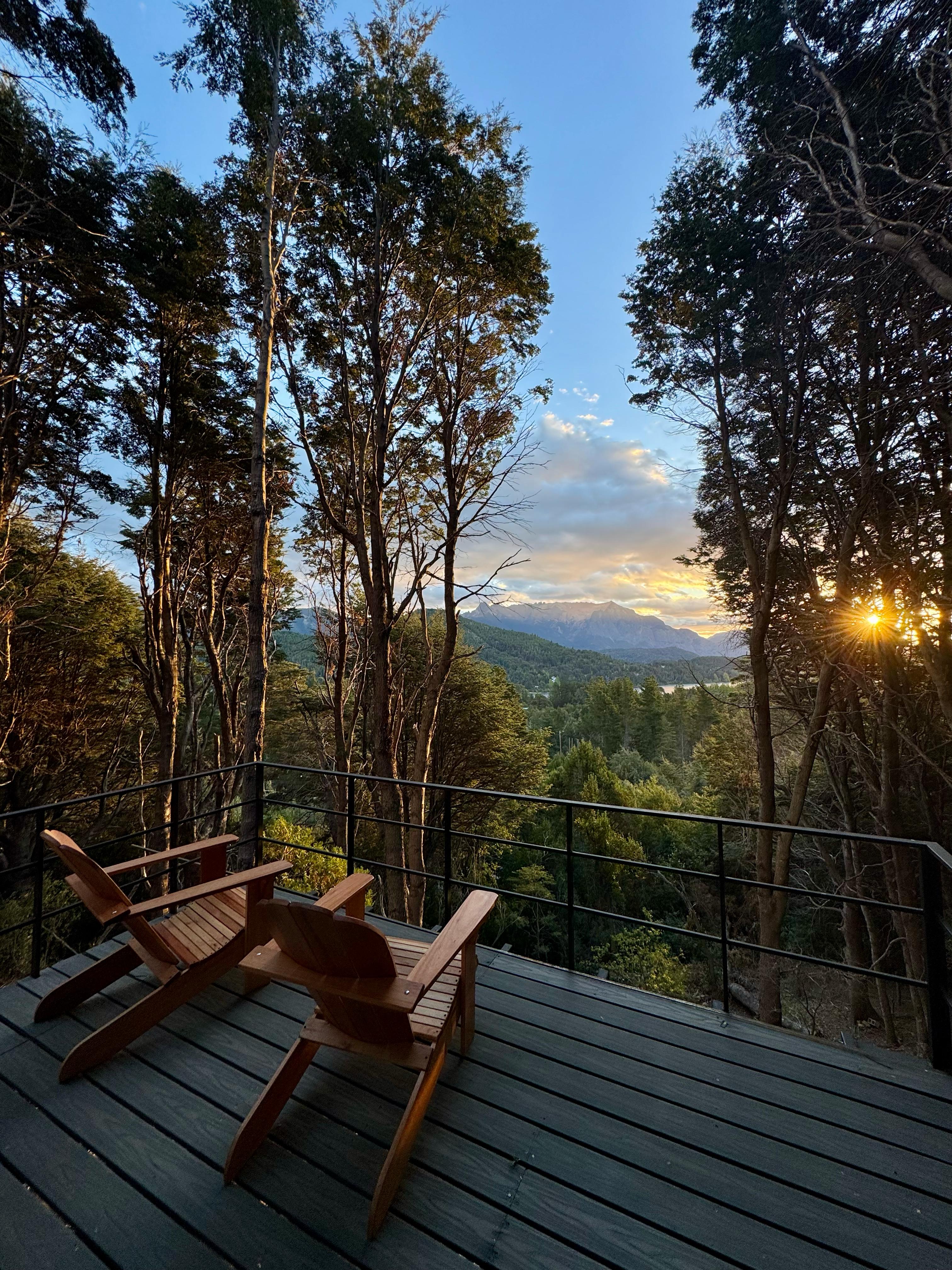
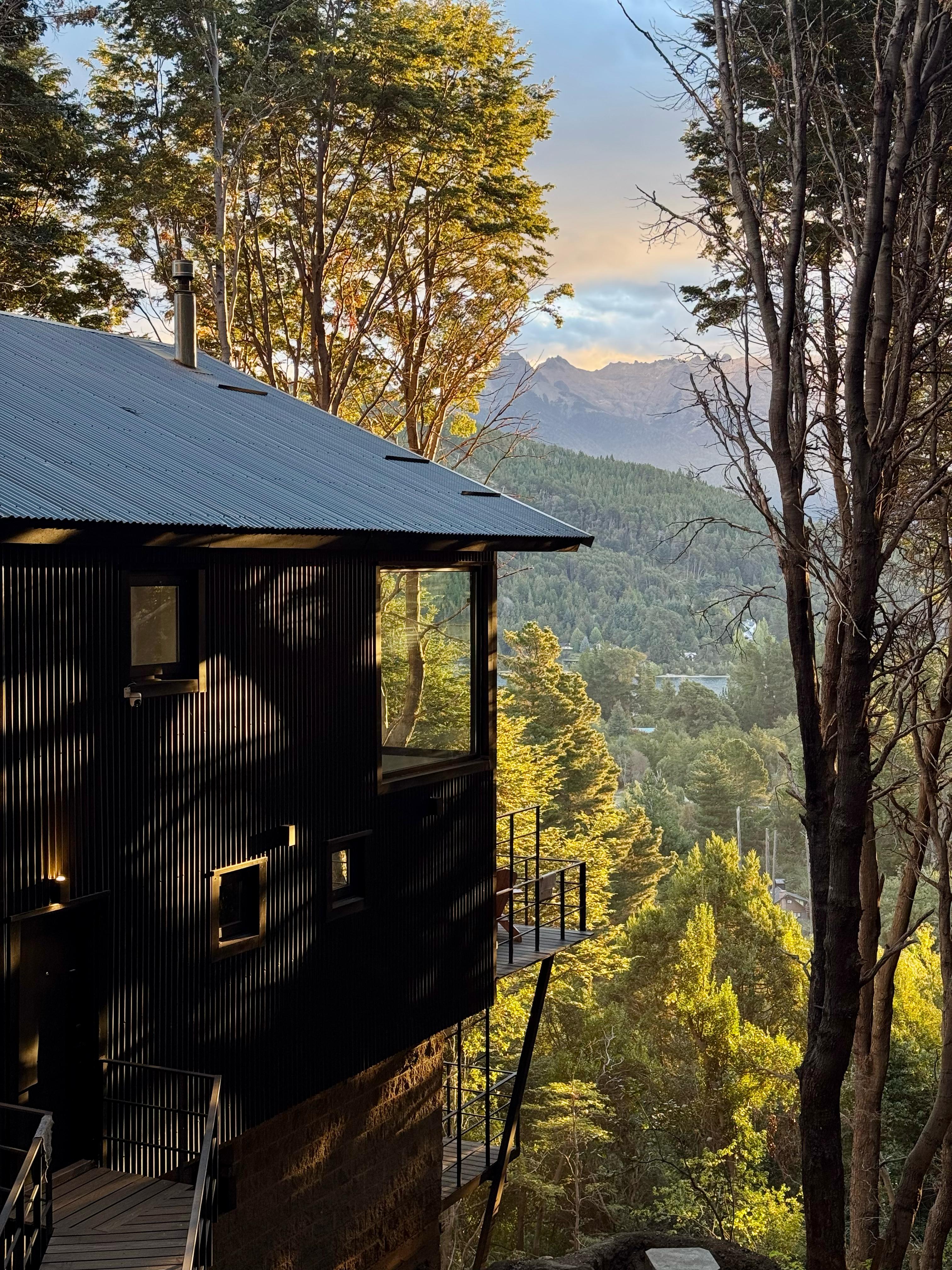
Posta Bariloche — black tower rising through coihue forest at golden hour

Posta
Bariloche

Península San Pedro
Bariloche · Patagonia
The House

A tower in
the coihue
forest.
Una torre en
el bosque de
coihue.
Ein Turm im
Coihue-
Wald.
Une tour dans
la forêt de
coihue.

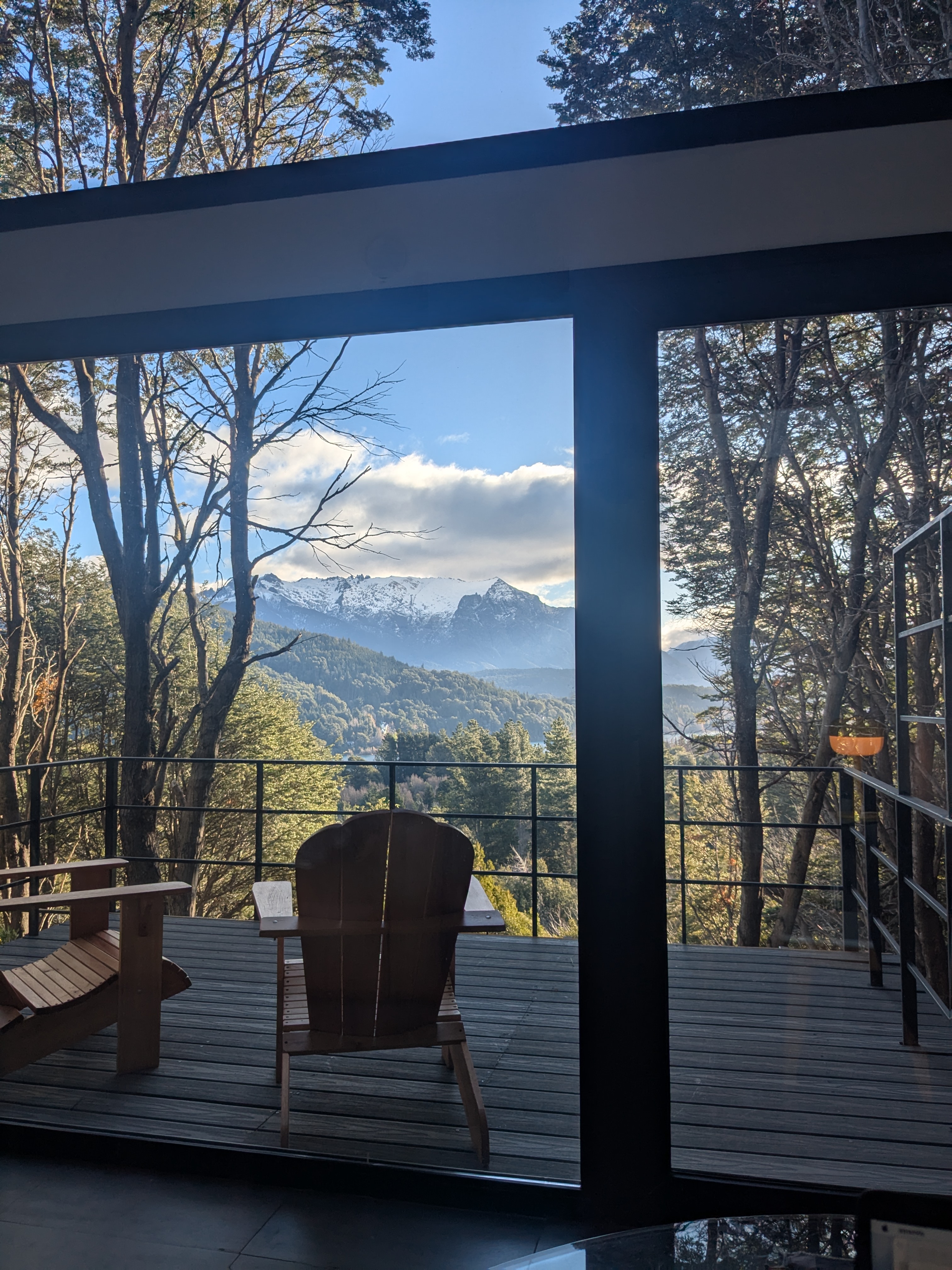
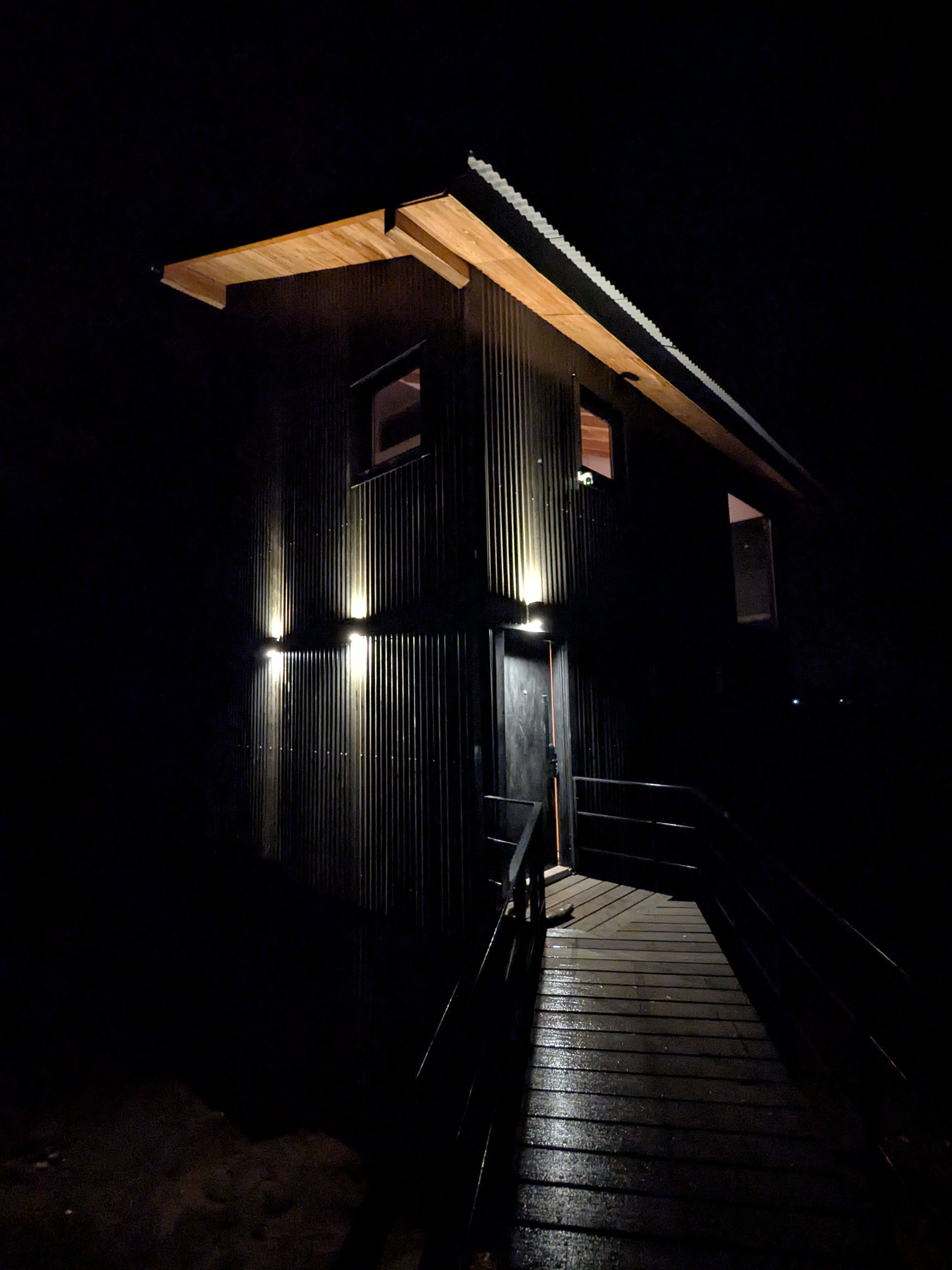
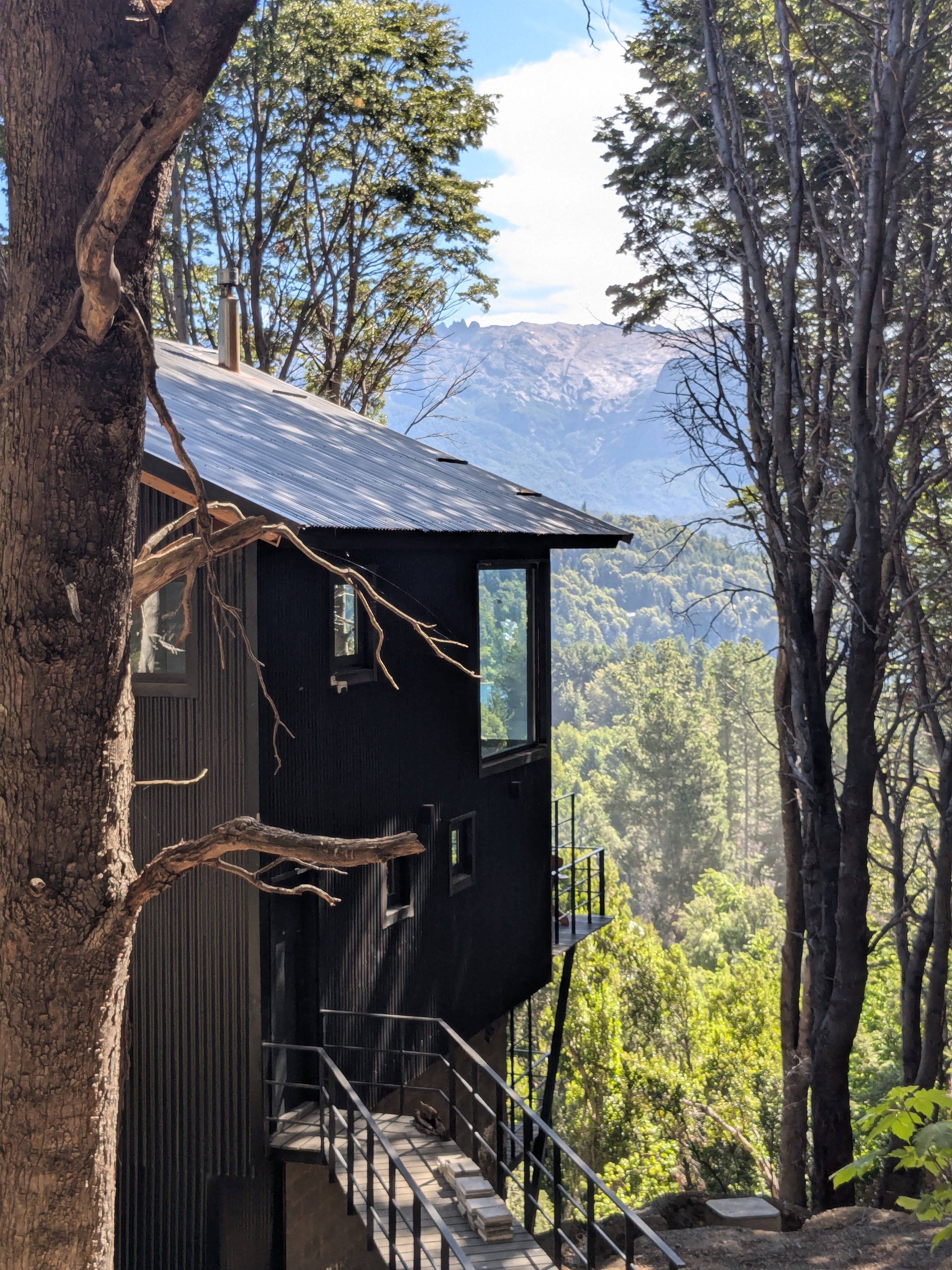
Posta Bariloche stands on the forested hillside of Península San Pedro, an exclusive peninsula inside Nahuel Huapi National Park. The house rises as a dark vertical form through native coihue — black corrugated steel against ancient trunks — with a glass front on two sides that frames unobstructed views of Cerro López and the lake below.

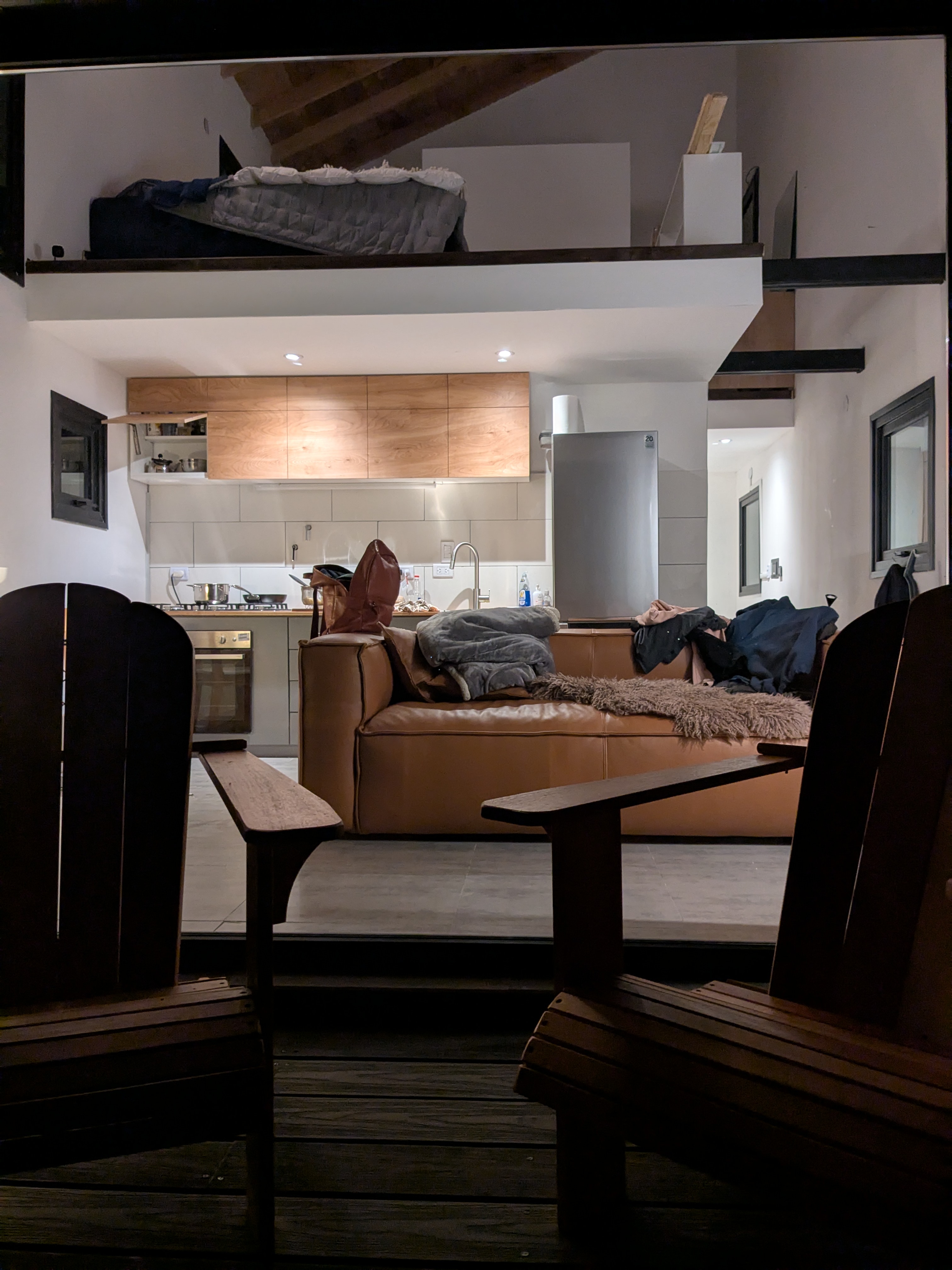
Eight-meter ceilings open the interior into the canopy. Heated concrete floors run the full ground floor. The kitchen is fully equipped; the leather sofa sits on a black sheepskin rug. Two king-sized bedrooms — one upstairs and one downstairs, en suite with its own private deck — sleep in total quiet, with only the wind in the trees and the occasional Austral parakeet. The upper bedroom has a dedicated workspace and a fourth-floor balcony where the lake appears through the treetops.

Posta Bariloche se encuentra en la ladera boscosa de la Península San Pedro, una península exclusiva dentro del Parque Nacional Nahuel Huapi. La casa se eleva como una forma vertical oscura a través del coihue nativo — acero corrugado negro contra troncos ancestrales — con frente de vidrio en dos lados que enmarca vistas despejadas al Cerro López y al lago.

Techos de ocho metros abren el interior hacia el dosel. Pisos de concreto radiante en toda la planta baja. Cocina equipada; sillón de cuero sobre alfombra de piel negra. Dos dormitorios king — uno arriba y uno abajo, en suite con deck privado propio — duermen en silencio total. El dormitorio superior tiene escritorio de trabajo y balcón en el cuarto piso con vistas al lago entre las copas.

Posta Bariloche liegt am bewaldeten Hang der Península San Pedro, einer exklusiven Halbinsel im Nationalpark Nahuel Huapi. Das Haus erhebt sich als dunkle Vertikalform durch den nativen Coihue-Wald — schwarzes Wellblech gegen uralte Stämme — mit einer Glasfront auf zwei Seiten und unverstellten Blicken auf den Cerro López und den See.

Acht Meter hohe Decken öffnen das Innere zum Blätterdach. Beheizter Betonboden im gesamten Erdgeschoss. Voll ausgestattete Küche; Ledersofa auf schwarzem Schaffell. Zwei King-Schlafzimmer — eines oben, eines unten mit eigenem Privat-Deck — schlafen in völliger Stille. Das obere Zimmer verfügt über einen dedizierten Arbeitsplatz und einen Balkon im vierten Stock mit Seeblick durch die Baumkronen.

Posta Bariloche est situé sur le flanc boisé de la Península San Pedro, une péninsule exclusive à l'intérieur du Parc National Nahuel Huapi. La maison s'élève comme une forme verticale sombre à travers le coihue natif — acier ondulé noir contre des troncs ancestraux — avec une façade vitrée sur deux côtés offrant des vues dégagées sur le Cerro López et le lac.

Des plafonds de huit mètres ouvrent l'intérieur sur la canopée. Planchers chauffants en béton sur tout le rez-de-chaussée. Cuisine entièrement équipée ; canapé en cuir sur tapis en peau noire. Deux chambres king — l'une à l'étage et l'autre au rez-de-chaussée en suite avec sa propre terrasse privée — dorment dans un silence total. La chambre supérieure dispose d'un espace de travail dédié et d'un balcon au quatrième étage avec vue sur le lac entre les cimes.

LocationPenínsula San Pedro · Nahuel Huapi N.P.
Bedrooms2 · King · En suite
Bathrooms2 · Full
HeatingRadiant floor · wood stove
Glass frontTwo sides · floor-to-ceiling
InternetStarlink
WorkspaceUpstairs · 4th floor balcony
ViewsCerro López · Nahuel Huapi
Min. stay2 nights
Deck at sunset — Cerro López and Nahuel Huapi beyond the coihue
10'
Playa sin Viento
10'
Cerro López
Hiking Trails
10'
Hotel Llao Llao
30'
Cerro Catedral
Ski Resort
40'
Bariloche
Centro
1h
Bariloche
Airport
2
Bedrooms
2
Bathrooms
King
Size Beds
Starlink
NP
National Park

The
Spaces

Every room faces the forest and the view. Glass on two sides. The mountain is always present.

Glass front — Cerro López through the steel frame Living room — leather sofa, black sheepskin, open to the deck Bedroom — king bed, exposed beams, Cerro López at dusk Interior at night — kitchen, loft bedroom visible above Deck view — lake and mountain through the coihue canopy Exterior — black tower, corrugated steel, Cerro López behind
Posta Bariloche at night — black tower lit against the dark forest

What's
included.

01
King beds
Premium mattresses, full linen, both bedrooms
02
Heated floors
Radiant concrete throughout the ground floor
03
Starlink
High-speed satellite internet — work from the forest
04
Full kitchen
Fully equipped for long stays — oven, fridge, cookware
05
Wood stove
Cast iron stove. The fire makes the room.
06
Lake views
Nahuel Huapi and Cerro López from every level
07
Workspace
Dedicated desk upstairs with 4th floor balcony views
08
Private decks
Downstairs en suite opens to its own forest deck
The Forest
Native
Patagonian
species.

Posta Bariloche stands inside one of the last intact native forests of the Andean-Patagonian range. Four species define this landscape — each with its own character, history, and name.

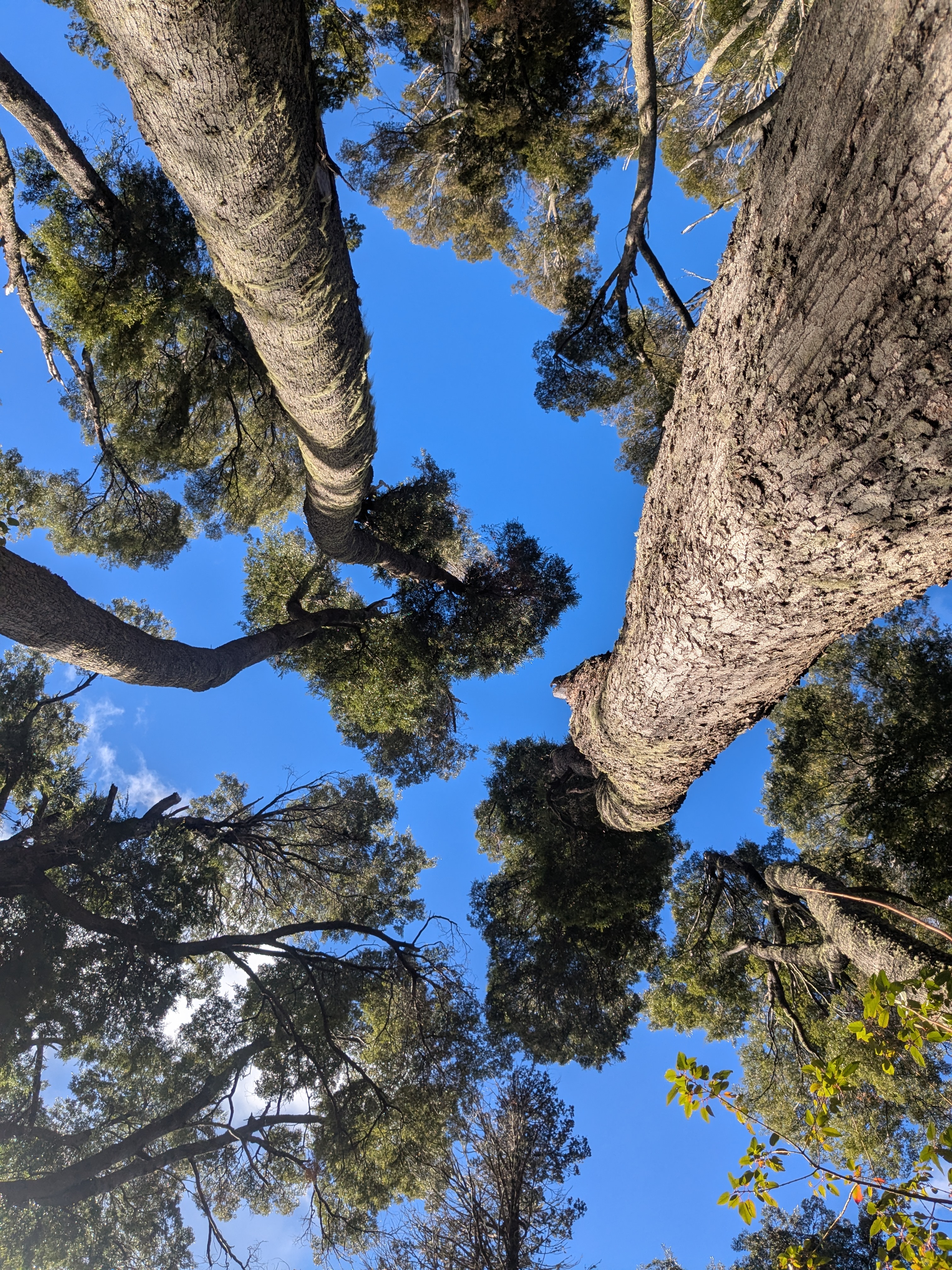
Looking up through the coihue and cypress canopy
01
Coihue
Nothofagus dombeyi
The dominant tree of the Andean-Patagonian forest and the one that surrounds Posta Bariloche on every side. Coihue is a southern beech — evergreen, long-lived, reaching 40 meters. Its smooth grey bark lightens with age; its small leathery leaves filter the Patagonian light into something green and diffuse. The name comes from the Mapudungun word koihue: simply, the tree. It is the forest itself.
02
Radal
Lomatia hirsuta
A small tree of the forest understory — in clearings and stream margins where more light reaches the ground. In summer it flowers in clusters of small cream-white blooms; in autumn its serrated leaves turn warm gold before falling. Its wood was used for tool handles and fire-starting. The radal is a quiet presence: not the first tree you notice, but the one you return to.
03
Lenga
Nothofagus pumilio
Lenga is the tree that turns Patagonia red. A deciduous southern beech, it climbs higher than any other Andean tree — right to the treeline — and each autumn its small round leaves transform entire mountainsides into fire. Up close, lenga is modest: low-branching, gnarled at altitude, twisted by decades of snow. From a distance, it is spectacular. It burns before it sleeps.
04
Ciprés de la Cordillera
Austrocedrus chilensis
One of Patagonia's most ancient survivors — individual trees can live more than 1,500 years. It grows on rocky slopes and well-drained hillsides, its aromatic reddish-brown wood long prized by Mapuche craftspeople for canoes and homes. The cypress marks thresholds: where forest opens onto steppe or lake. It marks time in ways humans cannot fully comprehend.
Etymology Patagonia.

The name first appeared in writing in 1520, recorded by Antonio Pigafetta, the Italian scholar who sailed with Magellan on the first circumnavigation of the Earth. Near the Strait that now bears Magellan's name, the expedition encountered the indigenous Tehuelche people — known for their height and for the large guanaco-skin boots they wrapped around their feet against the cold.

Pigafetta called them patagones — from the Spanish pata, foot, and possibly from the fictional giant Pathagon who appeared in the popular romance Primaléon (1512). The word carried the full weight of European mythology: giants at the edge of the world, where the map ran out and the imagination took over.

Mapuche traditions hold a different understanding. For them it is simply Wallmapu — the surrounding territory — the earth that has always been there, long before it needed a name invented by those arriving by sea. The giants were never giants. They were people who knew the cold, who wore what the land gave them, and who had been here long enough to know that the mountains were not the edge of anything. They were the center.
Around
Bariloche.

The peninsula puts you minutes from some of the most extraordinary corners of the Patagonian lake district. Here is where to go.

Bosque de Arrayán — ancient myrtle forest on the peninsula
01
Bosque de Arrayán
10 min · Circuito Chico, Llao Llao
One of the world's largest arrayán myrtle forests, ten minutes from Posta Bariloche on the Circuito Chico near Llao Llao. Twisted cinnamon-colored trunks rise over a mossy floor that inspired Disney's Bambi. Walk it in the morning when the bark glows orange. Or take the ferry from Puerto Llao Llao — ten minutes away — to Isla Victoria for a fully immersive old-growth forest experience.
Golf Llao Llao — alpine golf with lake and mountain views
02
Golf Llao Llao
10 min · Lago Moreno
Eighteen holes set between two lakes with Cerro López and Cerro Catedral as backdrop. One of the most scenic golf courses in South America. The hotel itself — a landmark of Patagonian alpine architecture — is worth visiting for a drink on the terrace alone.
Cerro Campanario — panoramic views over Bariloche lakes
03
Cerro Campanario
20 min · Chairlift
Ranked among the world's best views — a short chairlift ride to a summit that looks out over five lakes, the Llao Llao peninsula, and every major peak of the Argentine Andes. At the top: vintage alpine vibes, apple strudel, and a panorama that takes time to absorb.
Kayak and swimming at Playa sin Viento
04
Playa sin Viento
10 min · Lago Nahuel Huapi
A sheltered beach on the lake named for its stillness. The water is impossibly clear and cold — glacial runoff from the Andes, filtered through volcanic rock. Kayak rentals available on site. Come early for the stillness; stay for the light on the water in the afternoon.
Ski Cerro Catedral — largest ski resort in South America
05
Cerro Catedral
30 min · Ski · Hike · Bike
The largest ski resort in South America with over 120 km of runs, a vertical drop of 1,000 m, and a season that runs June through October. In summer the same mountain opens for trekking and mountain biking. The views from the ridge take in the entire lake district.
Fly fishing the rivers and lakes of Patagonia
06
Fly Fishing
Lakes · Rivers · Guided
Patagonia's rivers and lakes are legendary among fly fishers — crystal-clear water, wild brown and rainbow trout, and almost no one else around. Fish the Limay, the Traful, or Nahuel Huapi itself. Local guides available; licenses required and easy to arrange.
07
Solís · Cocina
Our local, right here on Península San Pedro. Solís is a small, serious kitchen using Patagonian ingredients with care and imagination. The kind of place that makes you rearrange your plans to eat there twice.
08
Ánima · Restaurante
Minutes from Posta Bariloche, Ánima brings refined Patagonian cooking to the lake road. Wood fire, local produce, natural wines. One of the best tables in the region — reserve ahead.
09
Cerro López
10 min · Hiking
The mountain you see from every window at Posta Bariloche. The trailhead is ten minutes by car. Full-day hikes reach the refuge at 1,650 m with sweeping views of the entire lake district. One of the great day hikes of Patagonia.

Rates.

Low Season
$220
USD · per night
Shoulder months — spring and autumn. The forest is quietest. Lenga turns red in May.
High Season
$330
USD · per night
Summer (January) and ski season (July–August). Cerro Catedral 30 min. Nahuel Huapi for swimming and kayak.
Cleaning
$70
USD · per stay
One flat fee per reservation, regardless of length. No additional service charges.
All rates USD · Minimum 2 nights · Cleaning fee added once per booking · Rates subject to change

Reserve
your dates.

Write us to check availability. We respond within 24 hours.

Send an Inquiry WhatsApp